
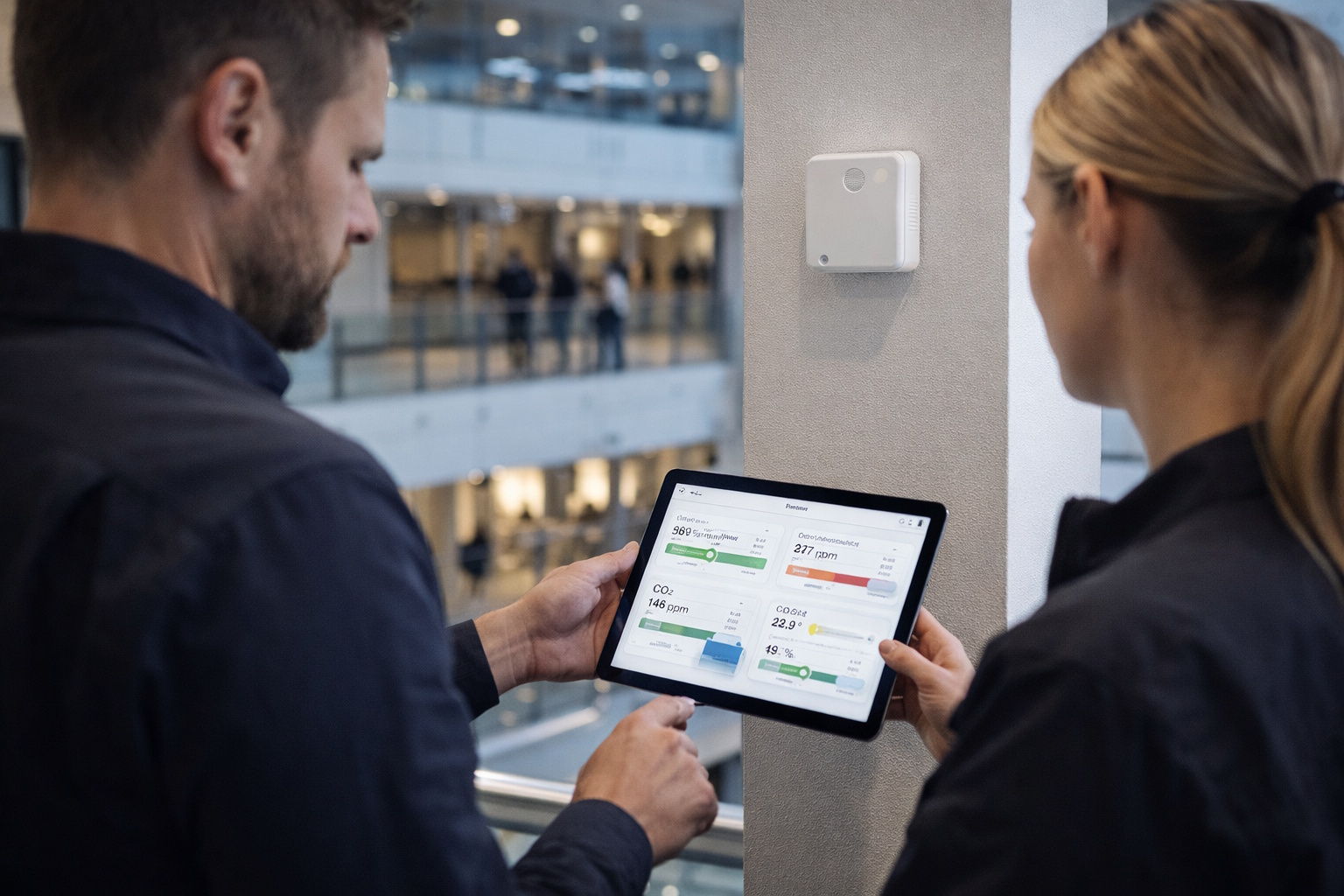
Air Quality
Ensure a healthy indoor climate with continuous air quality monitoring. Measure CO2, volatile organic compounds, particles and humidity for better health and productivity.
Good indoor climate gives better results
Poor air quality affects concentration, health and well-being. With continuous monitoring you can ensure the indoor climate maintains high standards and react quickly to deterioration.
CO2 measurement
Monitor carbon dioxide levels as an indicator of ventilation and air exchange.
VOC detection
Measure volatile organic compounds from paint, furniture and cleaning products.
Humidity
Keep humidity at a comfortable and healthy level to avoid mold and dry air.
Particle measurement
Monitor fine particles (PM2.5/PM10) to ensure clean air.
Real-time display
See air quality in real-time on screens in the premises or in the portal.
Ventilation optimization
Use data to control ventilation on demand and save energy.
How we measure air quality
From installation to better indoor climate.
Placement
We identify critical zones and place sensors for representative measurement.
Installation
Discreet mounting of sensors that continuously measure air quality.
Thresholds
We set up alerts based on recommended thresholds and your preferences.
Action
On deviations you receive alerts and can take action such as increased ventilation.
Who needs air quality measurement?
Good indoor climate is important in many different environments.
Offices
Better concentration and less sick leave with optimal air quality.
Schools and kindergartens
Ensure good air quality for children and staff throughout the day.
Healthcare facilities
Critical air quality for patients and staff in hospitals and clinics.
Fitness centers
High activity requires good ventilation and clean air.
Retail and shopping centers
Comfortable indoor climate for customers and staff increases satisfaction and sales.
Hotels
Ensure guests a good indoor climate in rooms and common areas.
Benefits of air quality measurement
Good indoor climate provides measurable benefits.
- Better health and fewer complaints
- Increased productivity and concentration
- Demand-controlled ventilation saves energy
- Document compliance with workplace requirements
- Increased comfort for employees and visitors
- History for analysis and improvement
Integrated with Insight Portal
All our sensors and services connect to our in-house developed portal for easy access to data and analysis.
Frequently asked questions
Find answers to the most common questions about this service.
Below 800 ppm is considered good, 800-1000 ppm is acceptable, above 1000 ppm indicates need for better ventilation.
It depends on the size and layout of the premises. Typically one sensor is placed per zone or room.
Yes, we can integrate with BMS for demand-controlled ventilation based on actual measurements.
Yes, most of our air quality sensors also include temperature and humidity measurement.
You can receive alerts via SMS, email or push notifications when values exceed thresholds.
Want to improve indoor climate?
Contact us to discuss how air quality measurement can help your business.