
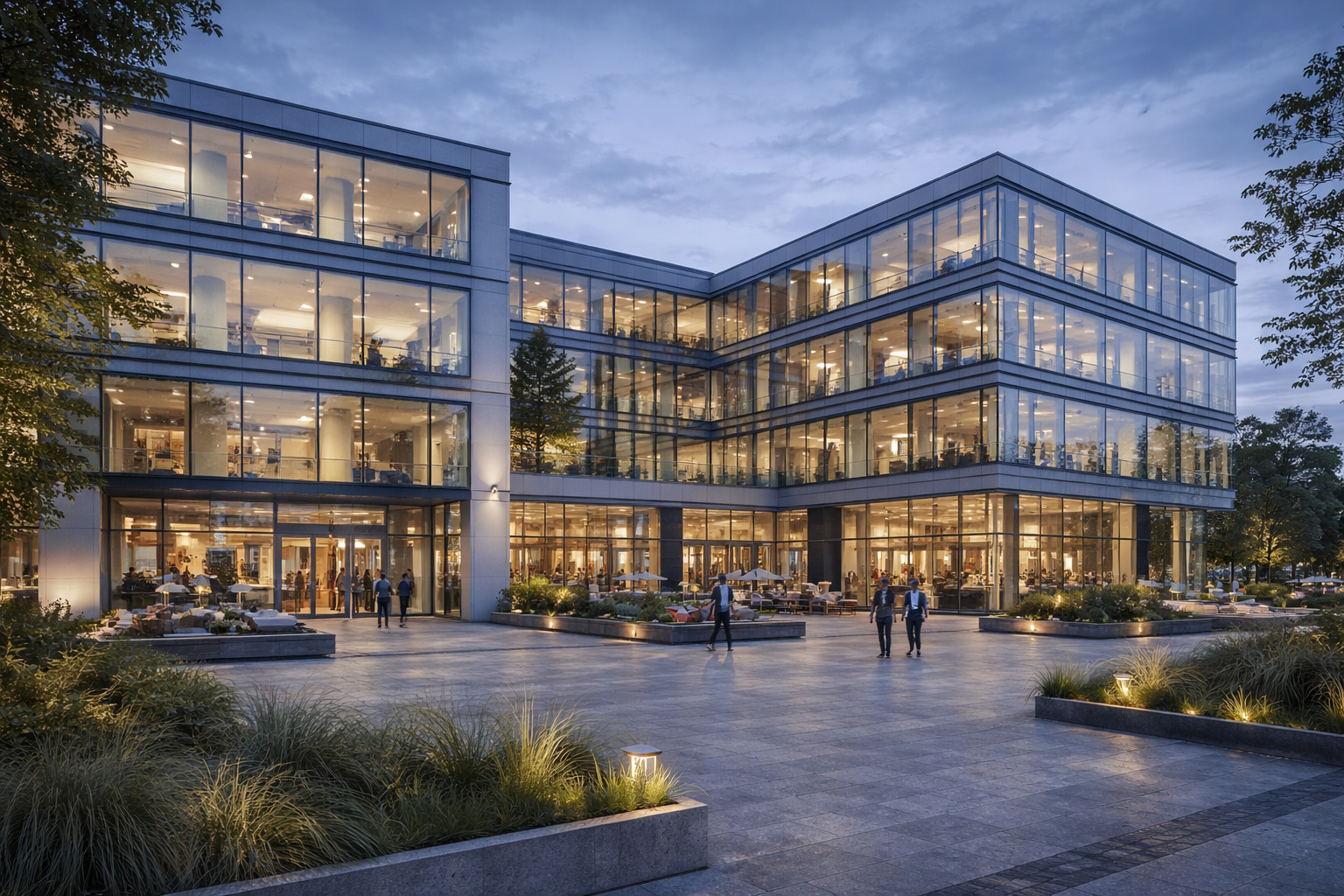
Smartere eiendomsforvaltning med IoT og data
Få full kontroll over næringsbygget ditt. Fra besøkstelling og inneklima til energiforbruk og lekkasjedeteksjon – våre IoT-sensorer gir eiendomsforvaltere den innsikten de trenger for å redusere driftskostnader, dokumentere tjenesteleveranser og øke leietakertilfredsheten.
Eiendomsforvaltning uten data er dyrt
De fleste næringsbygg driftes basert på faste avtaler og antakelser. Renhold skjer etter en fast plan uavhengig av faktisk bruk. Ventilasjon kjøres på maks hele dagen. Temperaturen kontrolleres med en termostat som kanskje ikke reflekterer virkeligheten. Og lekkasjer oppdages først når skaden er et faktum.
Med IoT-sensorer får du objektive data om hvordan bygget faktisk brukes og presterer – og kan ta beslutninger som direkte reduserer kostnader og øker kvaliteten på tjenesteleveransen.
15-30%
Potensial for energibesparelse
20-40%
Reduksjon i unødvendig renhold
95%+
Nøyaktighet på telling
24/7
Kontinuerlig overvåking
IoT-løsninger for eiendomsforvaltere
Hver sensor gir deg innsikt som kan omsettes til bedre drift, lavere kostnader og mer fornøyde leietakere.
Besøkstelling og arealbruk
Vit nøyaktig hvor mange som bruker bygget, hvilke etasjer og soner som er mest trafikkert, og når toppene kommer. Bruk dataene til å optimalisere renholdsplaner, justere bemanning i resepsjonen og dokumentere faktisk bruk overfor leietakere.
- Behovsstyrt renhold basert på faktisk trafikk
- Dokumenter arealbruk for leietakerforhandlinger
- Optimaliser fellesarealer og møteromsutnyttelse
Temperaturovervåking
Overvåk faktisk temperatur i alle soner av bygget – kontorer, fellesarealer, serverrom og tekniske rom. Avdekk avvik mellom innstilt og reell temperatur, identifiser kalde soner og varmepunkter, og dokumenter inneklima overfor leietakere som klager.
- Avdekk avvik mellom termostat og reell temperatur
- Dokumenter inneklima ved leietakerklager
- Forebygg frostskader i tekniske rom
Luftkvalitet og CO2
Høy CO2 gjør folk trøtte og ukonsentrerte. Ved å overvåke CO2, fuktighet og partikkelnivåer kan du styre ventilasjonen etter faktisk behov i stedet for å kjøre den på maks hele dagen. Resultatet er bedre inneklima og lavere energikostnader.
- Behovsstyrt ventilasjon sparer 15-25% energi
- Bedre konsentrasjon og trivsel for leietakere
- Dokumenter inneklimakvalitet (Arbeidstilsynet)
Energimåling og forbruksanalyse
Forstå hvor energien i bygget går. Overvåk forbruk på belysning, ventilasjon, oppvarming og kjøling i sanntid. Identifiser utstyr som bruker strøm unødvendig, sammenlign forbruk mellom etasjer og soner, og sett opp varsler ved uventet forbruksøkning.
- Identifiser energisløsing i sanntid
- Fordel energikostnader rettferdig mellom leietakere
- Dokumenter bærekraftstiltak og ESG-rapportering
Lekkasjedeteksjon
Vannskader er blant de dyreste hendelsene i næringsbygg. Trådløse sensorer plassert i tekniske rom, under vasker, ved rør og i kjellere varsler umiddelbart ved første tegn på fukt – ofte dager før skaden blir synlig og kostbar.
- Forebygg kostbare vannskader
- Overvåk tekniske rom og kjellere 24/7
- Reduser forsikringspremier med dokumentert forebygging
Sentralt dashbord
Samle alle data fra alle sensorer i én oversiktlig plattform. Se status for hele porteføljen, drill ned i enkeltbygg og soner, og sett opp automatiske rapporter til eiere, leietakere og driftspersonell.
- Alle bygg og sensorer i én visning
- Automatiske rapporter til eiere og leietakere
- API, FTP, MQTT og MCP-integrasjoner
Slik bruker eiendomsforvaltere IoT-data
Konkrete eksempler på hvordan data fra IoT-sensorer gir bedre drift og lavere kostnader.
Behovsstyrt renhold – vask når det trengs
Et kontorbygg med 8 etasjer brukte besøkstellere på toaletter og fellesarealer for å kartlegge faktisk bruk. Resultatet viste at 3. og 4. etasje hadde dobbelt så mye trafikk som de øvrige. Renholdsplanen ble justert – hyppigere vask der det trengs, sjeldnere der det ikke gjør det. Årlig besparelse: 25% på renholdsbudsjettet, uten at kvaliteten gikk ned.
Energioptimalisering med reelle data
En eiendomsforvalter med 12 bygg i porteføljen installerte energimålere og CO2-sensorer. De oppdaget at ventilasjonen i flere bygg kjørte på full kapasitet også i helger og ferier. Ved å koble ventilasjon til faktisk belegg (via CO2 og besøkstelling) reduserte de energikostnadene med 22% – uten investeringer i nytt ventilasjonsanlegg.
Dokumentert inneklima ved leietakerklager
En leietaker klaget gjentatte ganger på at det var for kaldt i lokalene. Temperaturlogg fra IoT-sensorer viste at temperaturen konsekvent lå på 21-22°C – innenfor avtalt nivå. Dataene avsluttet diskusjonen og sparte forvalteren for en kostbar HVAC-gjennomgang.
Lekkasje oppdaget i tide
En lekkasjesensor i et teknisk rom i kjelleren varslet om fukt en lørdag kveld. Vaktmesteren fikk SMS og fikk stengt vanntilførselen innen en time. Uten sensoren ville lekkasjen gått uoppdaget til mandag – med potensielt hundretusener i skade på teknisk utstyr og bygningskropp.
Én plattform for hele porteføljen
Forvalter du flere bygg? Vår plattform gir deg oversikt over alle eiendommer fra ett dashbord. Sammenlign energiforbruk, inneklima og driftskostnader på tvers av bygninger – og identifiser hvor det er mest å hente.
Benchmarking på tvers av bygg
Sammenlign KPIer som energiforbruk per kvm, inneklimakvalitet og driftskostnad per leietaker.
Sentraliserte varsler
Felles varslingssystem for temperaturavvik, lekkasjer og energitopper på tvers av alle eiendommer.
Automatiserte rapporter
Generer månedlige driftsrapporter til eiere og styret – med faktiske data i stedet for estimater.
API og integrasjoner
Koble til eksisterende FDV-systemer, BMS eller ERP via REST API, FTP, MQTT eller MCP.
Typisk sensorplassering i næringsbygg
Innganger og lobbyer
Besøkstellere for trafikkanalyse
Kontorer og møterom
Temperatur- og CO2-sensorer
Tavlerom og ventilasjonsrom
Energimålere og forbruksanalyse
Kjellere og tekniske rom
Lekkasjesensorer for tidlig varsling
Fellesarealer og toaletter
Luftkvalitet og besøkstelling for renholdsoptimalisering
Klar for smartere eiendomsforvaltning?
Enten du forvalter ett bygg eller en hel portefølje – vi tilpasser løsningen til dine behov. Start med én sensortype og utvid etter hvert som du ser verdien.